Robotic welding – precision, repeatability and high quality
We offer robotic welding services that ensure high precision, repeatability and consistent quality of metal components. Thanks to the use of modern welding robots and advanced control systems, we are able to carry out welding processes in accordance with technical documentation and customer quality requirements.
Moreover, automation of the welding process significantly reduces the risk of human error while guaranteeing constant weld parameters, which is crucial in industrial and serial production. As a result, finished components are characterized by high aesthetic quality and durable joints.
Where robotic welding is used
Robotic welding technology is applied in the processing of various materials, such as:
- carbon and alloy steel,
- stainless steel,
- aluminium,
- other structural metals.
Thanks to the flexibility of robotic systems, it is possible to weld components of different shapes and thicknesses. In addition, process parameters are individually adjusted to material properties and project requirements, ensuring high weld quality and repeatability.
Advantages of robotic welding
Robotic welding offers numerous advantages compared to traditional methods, because it:
- ensures high precision and repeatability of welds,
- provides stable quality regardless of production volume,
- reduces lead time through process automation,
- minimizes the risk of errors and production rejects,
- enables the execution of complex welded joints.
Therefore, this solution is particularly recommended for serial production as well as for demanding industrial projects.
Applications of robotic welding services
We provide robotic welding services for many industrial sectors, including:
- machinery and industrial equipment manufacturing,
- construction and structural engineering,
- automotive industry,
- production of steel structures and metal components,
- furniture and advertising sectors.
Both single parts and larger production series are delivered with high quality standards and on-time completion.
Comprehensive project execution
Thanks to our modern machine park, we offer comprehensive execution of industrial projects. Robotic welding can be combined with other technological processes such as laser cutting, sheet metal bending and CNC machining.
As a result, customers receive finished components manufactured in one location, which improves logistics and shortens overall lead times.
Where we deliver our services
We provide robotic welding services for clients throughout Poland and abroad. We most frequently cooperate with companies from Szczecin and the West Pomeranian region, as well as with customers from Germany and other European Union countries.
This allows us to ensure efficient logistics and timely deliveries.
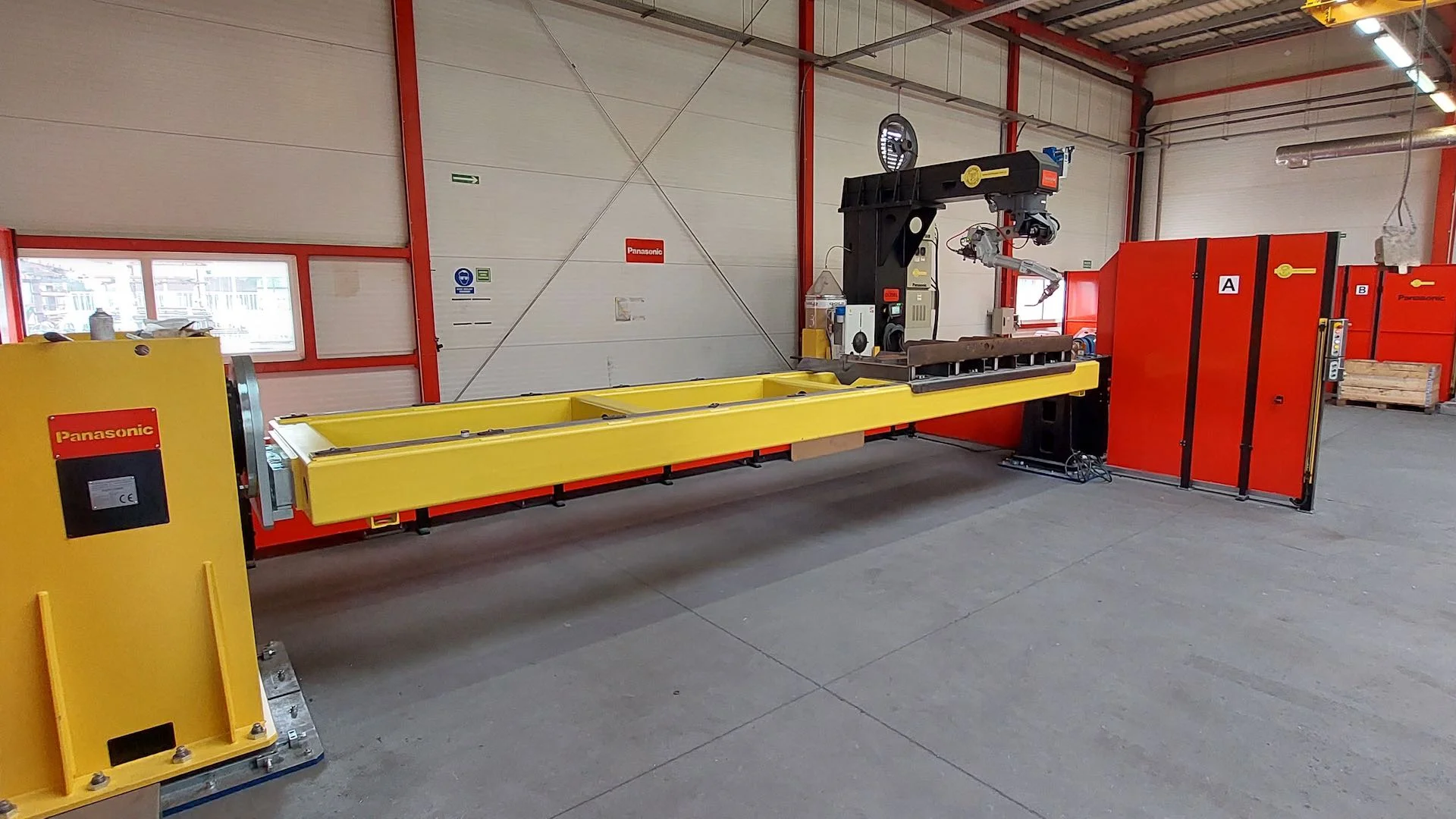
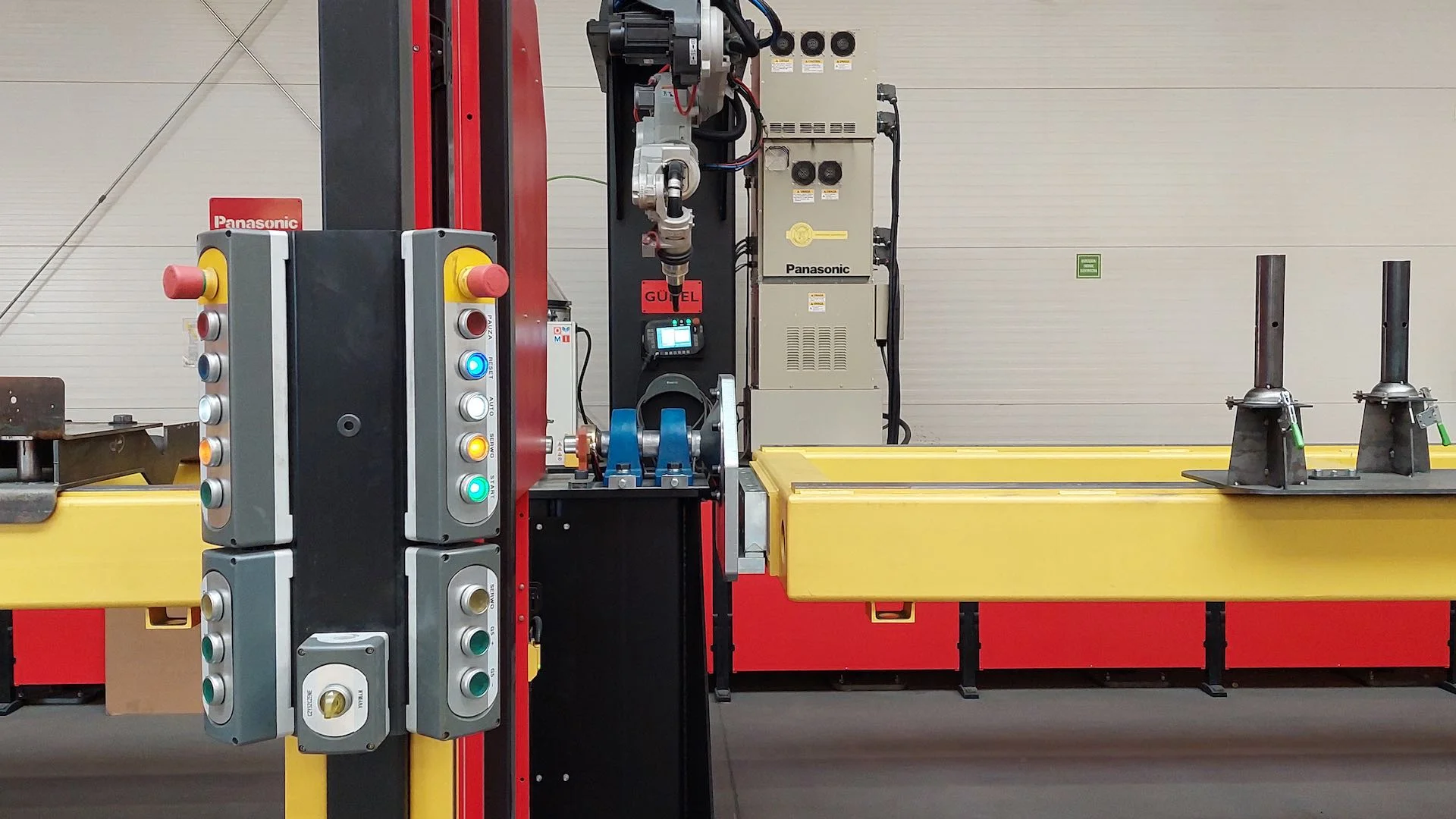
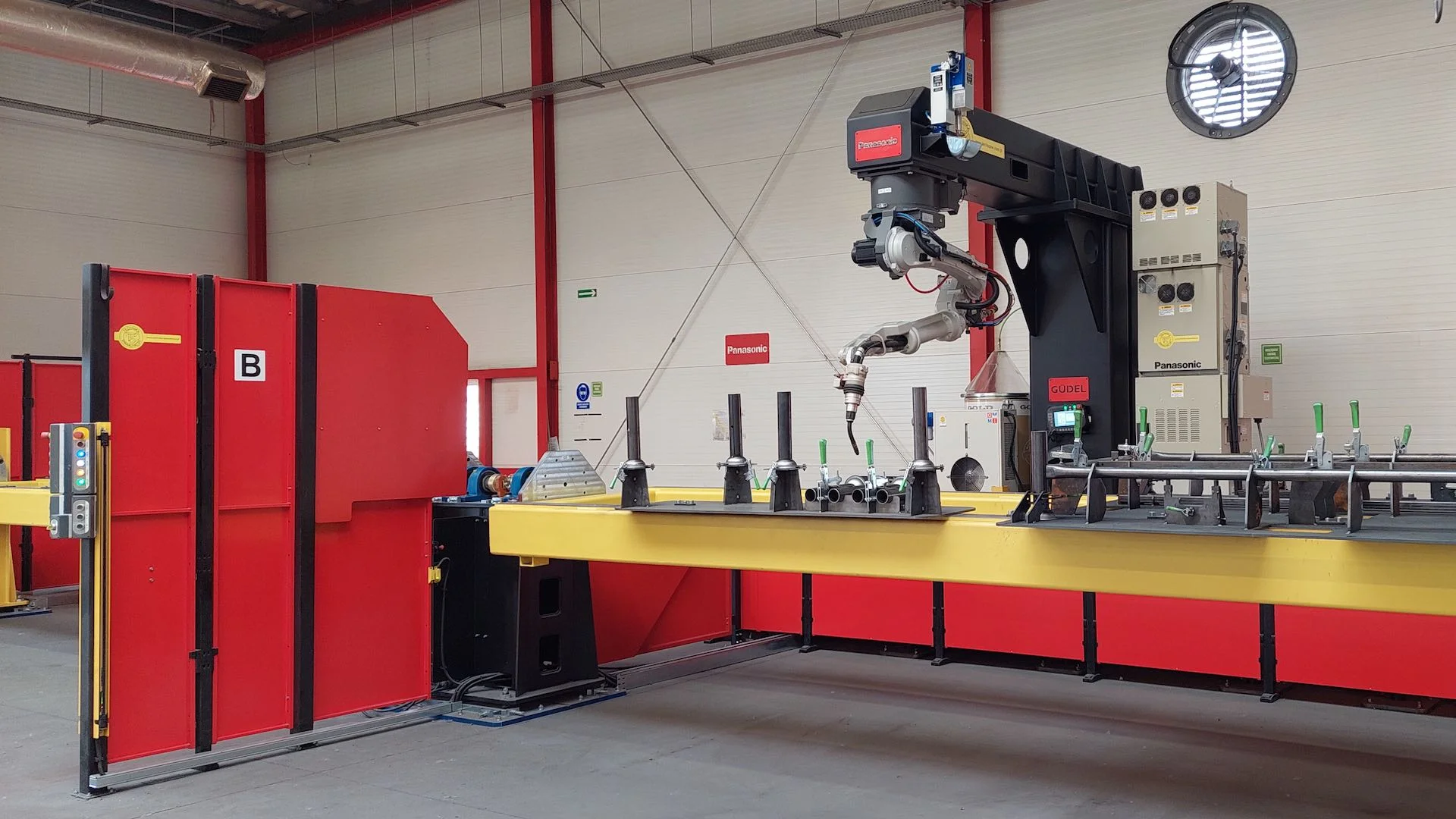
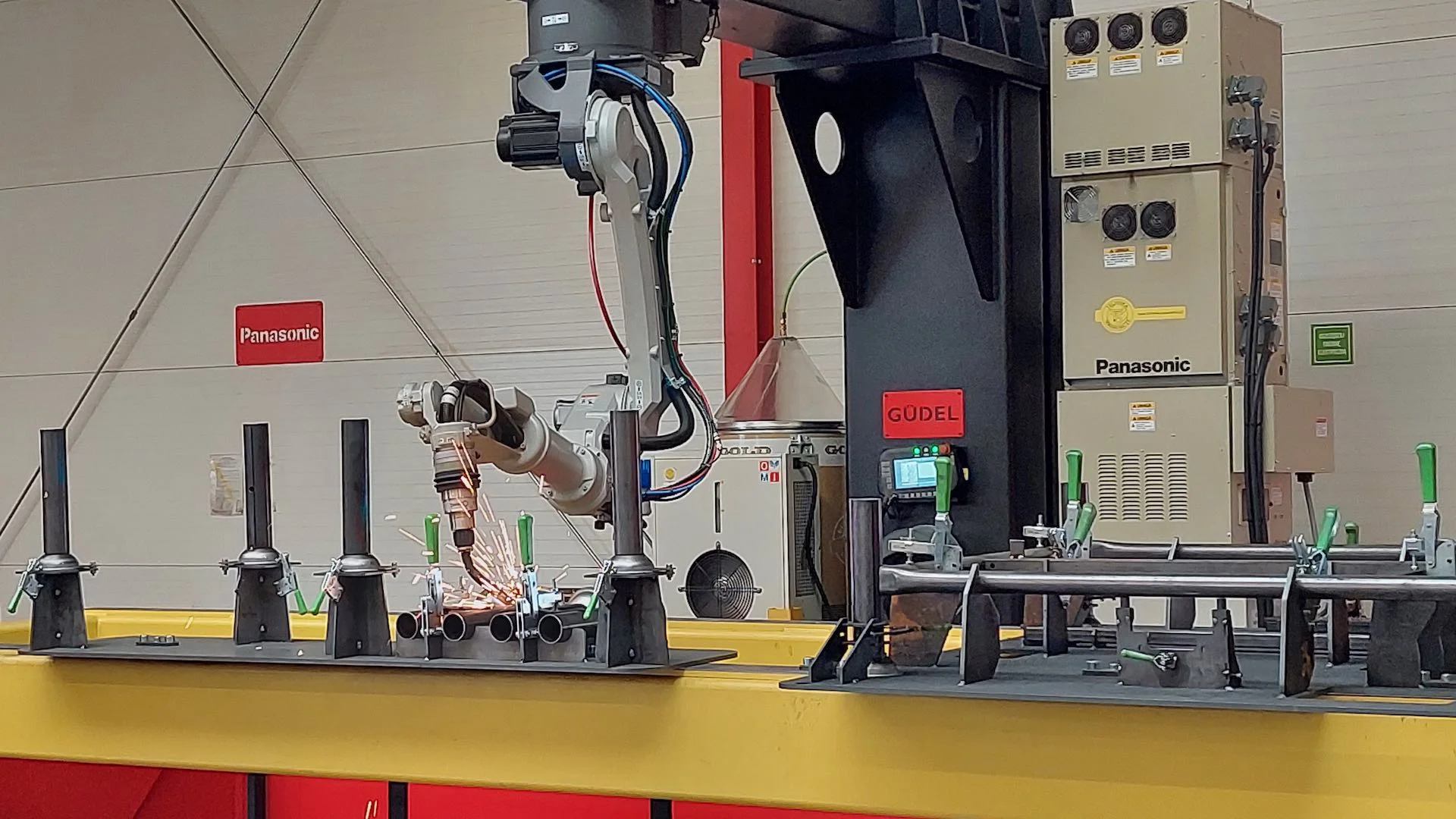
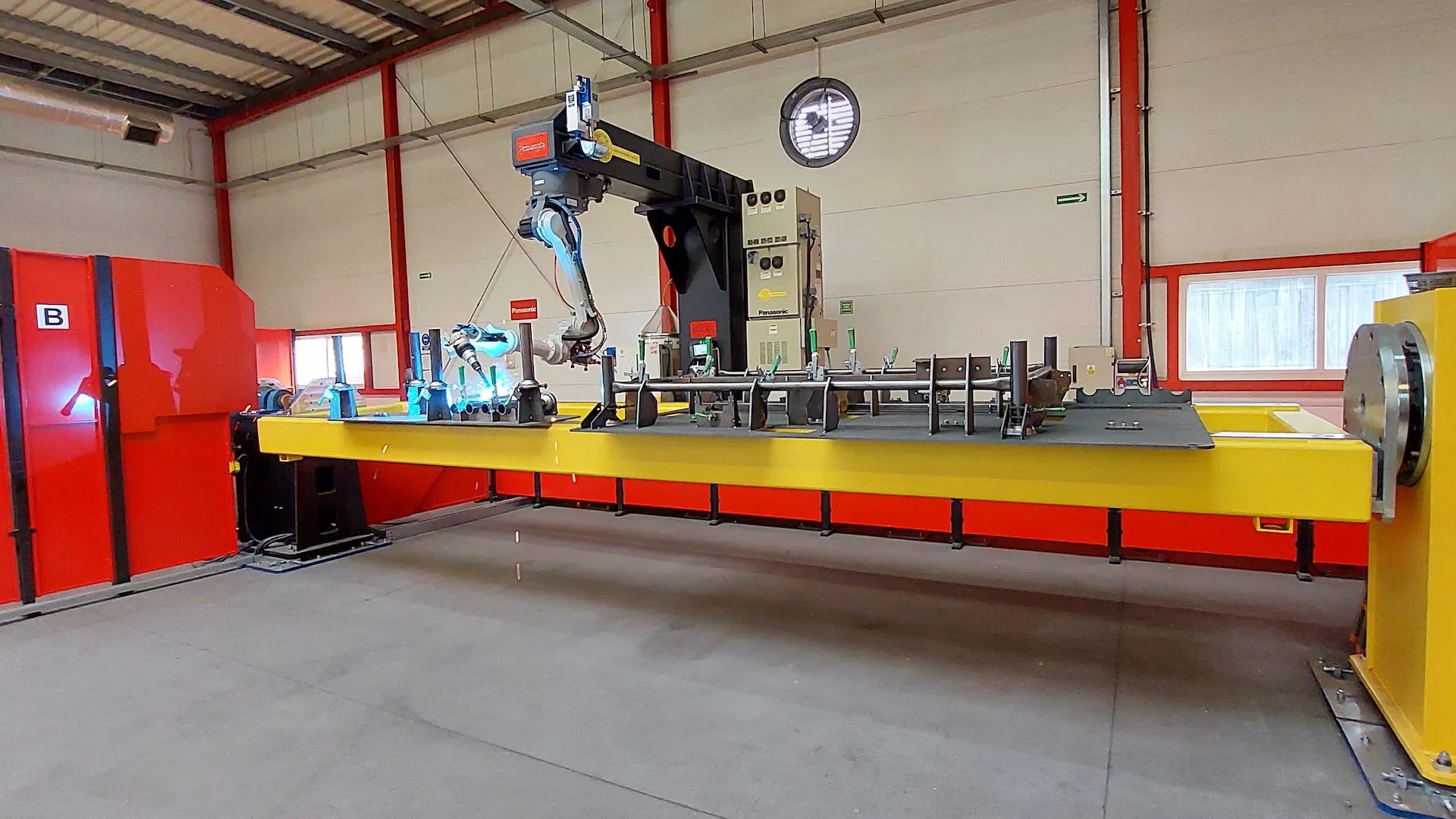
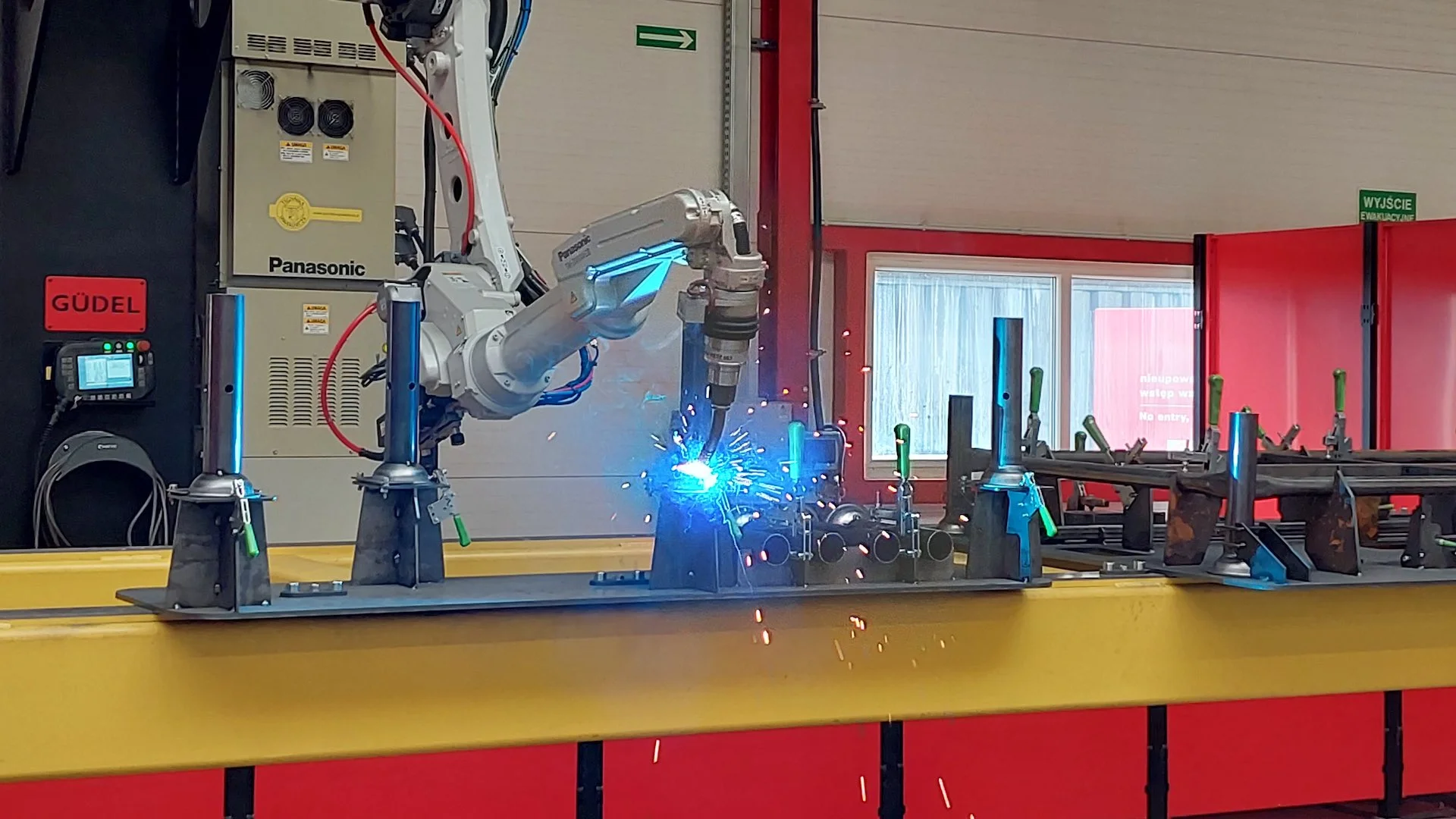
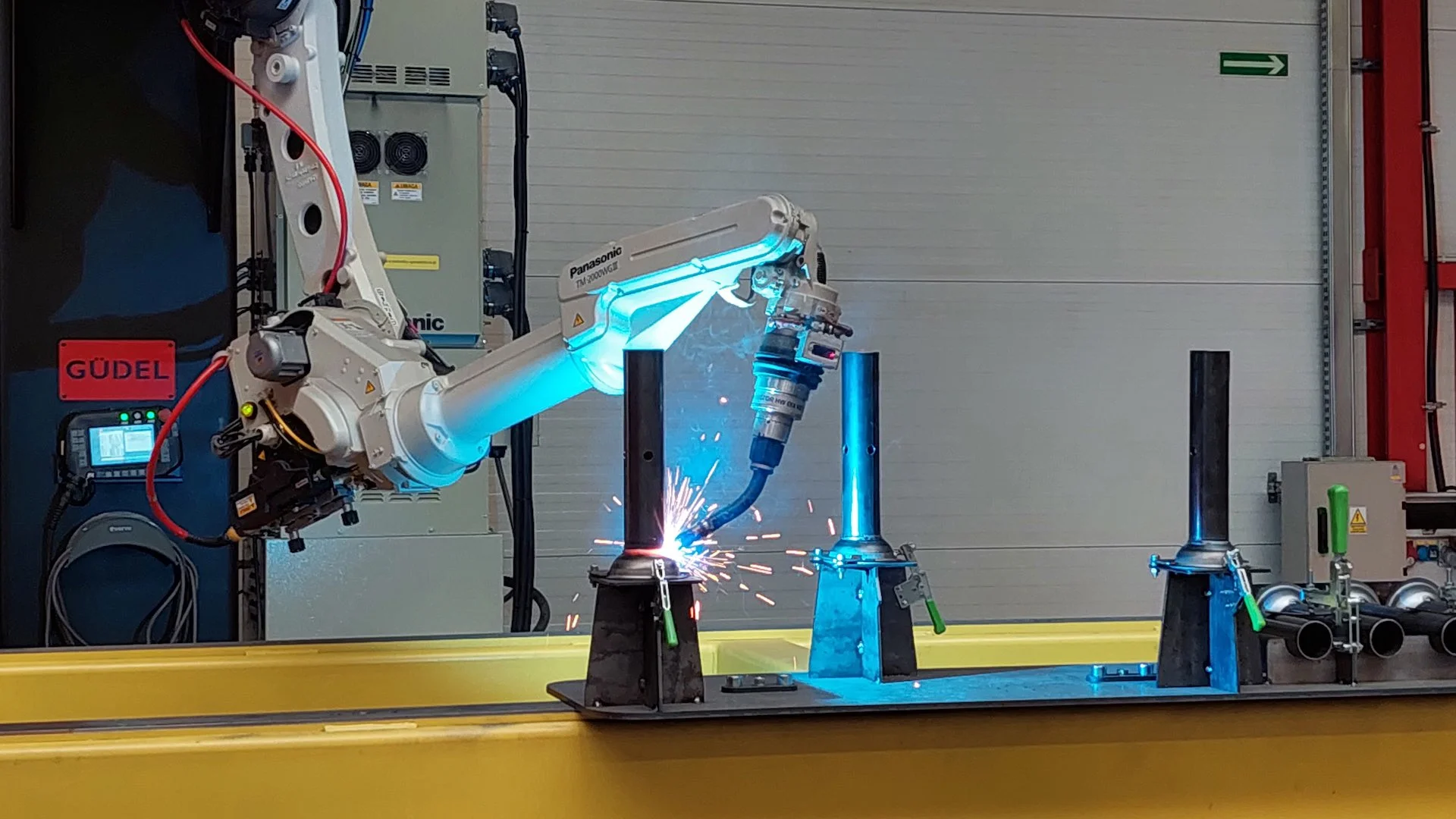
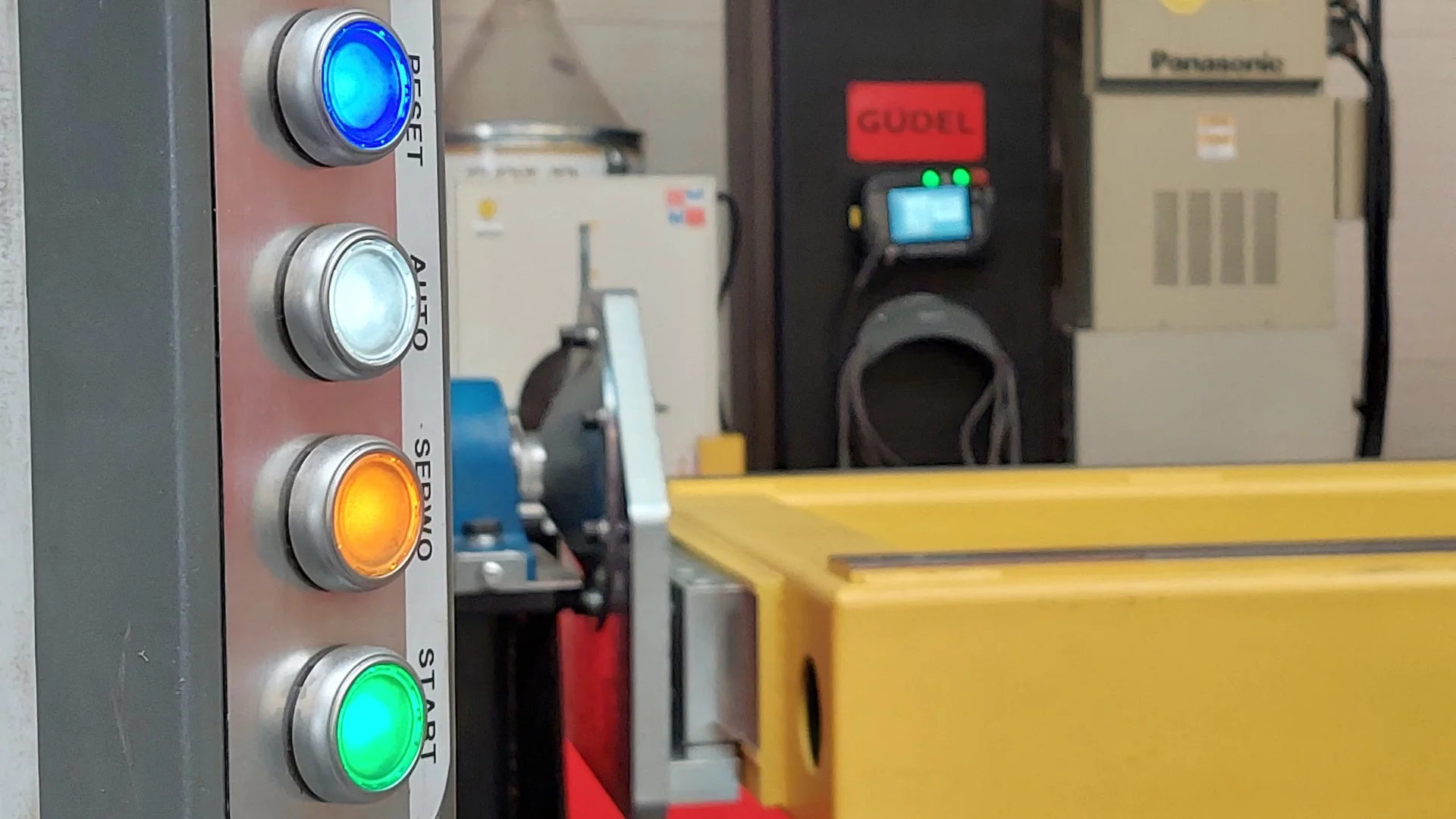
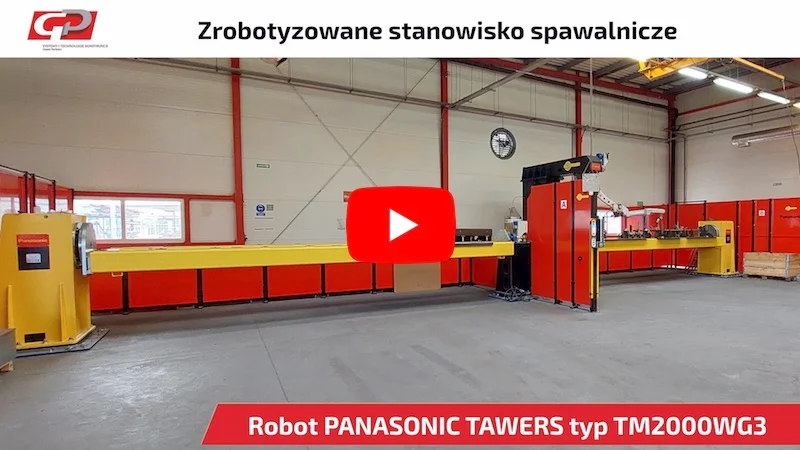
Robotized welding station using PANASONIC TAWERS robot type TM2000WG3
The robot, mounted on a single track with a working stroke length of around 13 meters, is positioned opposite two workstations equipped with positioners with a load capacity of 2000 kg.
The modern robotic welding station allows us to achieve:
- increased production efficiency,
- improved production consistency,
- very high and repeatable welding quality.
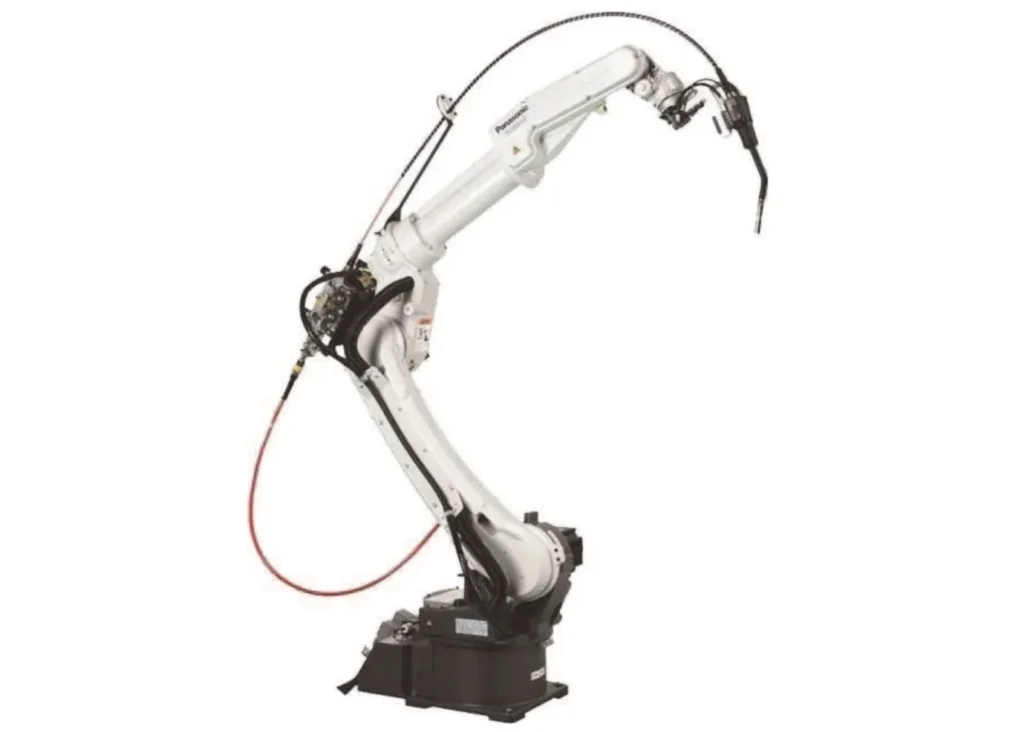
PANASONIC TAWERS TM2000WG3 Robot - Presentation
PANASONIC Model TM-2000 Robot
| PANASONIC Model Robot | TM-2000 | |
| Number of axes | 6 | |
| Range of motion | ||
Arm | Rotation | ±170° |
| Upper arm | -90° to 165° | |
| Front arm | -80° to 210° | |
Joint | Turnover | ±270° |
| Bend | -160° to 95° | |
| Twist | ±400° | |
| Maximum angular velocity | ||
Arm | Rotation | 195°/s |
| Upper arm | 197°/s | |
| Front arm | 205°/s | |
Joint | Turnover | 425°/s |
| Bend | 425°/s | |
| Twist | 629°/s | |
| Maximum allowable load | 6 kg |
| Repeatability | ±0.10 mm or less |
| Brakes | All axes with brakes |
| Mass | 217 kg |
| Range | 2011 mm |
Welding robot OTC JAPAN FD-B6
Simple and slender design, ideal for arc welding that demands the highest speeds in the industry.
FAQ
What is robotic welding?
Robotic welding is the process of joining metal components using numerically controlled industrial robots. It enables high precision, repeatability and stable weld quality.
What materials can be welded using robotic welding?
Robotic welding can be used to join carbon steel, stainless steel, aluminium and other structural metals. Process parameters are selected individually depending on material type and thickness.
Do you offer serial and single-piece production?
Yes, we carry out both serial production and single components. However, robotic welding is particularly efficient for larger production runs where repeatability and quality are critical.
What are the advantages of robotic welding compared to manual welding?
Robotic welding provides higher precision, consistent weld quality, shorter lead times and a lower risk of errors compared to manual methods.
Can robotic welding be combined with other services?
Yes, robotic welding can be combined with laser cutting, sheet metal bending, CNC machining and other technologies, enabling comprehensive execution of industrial projects.
Which industries do you serve with robotic welding services?
We work with companies from the machinery, construction, structural, automotive and manufacturing industries, as well as the furniture and advertising sectors