Hydraulic presses – precise metal forming and processing
We offer services performed using hydraulic presses, enabling precise forming and processing of metal components in accordance with technical documentation. Thanks to modern machinery and an experienced team, we ensure high accuracy, repeatability and stable process quality.
Moreover, the use of hydraulic presses allows precise control of pressing force, which is particularly important when processing components with different thicknesses and material properties. As a result, finished parts meet high technical and quality requirements.
Where hydraulic presses are used
Hydraulic press technology is used in the processing of a wide range of materials, such as:
- carbon and alloy steel,
- stainless steel,
- aluminium,
- other structural metals.
Thanks to this, it is possible to perform both simple pressing operations and more complex forming processes. In addition, press parameters are individually adjusted to the material type and specific project requirements.
Advantages of hydraulic presses
The use of hydraulic presses in the production process offers numerous benefits, because it:
- ensures high precision and force control,
- enables process repeatability in serial production,
- allows processing of components with varied geometries,
- guarantees stable quality regardless of order size,
- shortens lead times through efficient process organization.
Therefore, hydraulic presses are a reliable solution in modern metal processing
Applications of hydraulic press technology
Services performed using hydraulic presses are applied across many industrial sectors, including:
- machinery and industrial equipment manufacturing,
- construction and structural engineering,
- automotive industry,
- production of steel structures and metal components,
- furniture and advertising sectors.
Both single components and larger production series are delivered with consistent quality and on-time execution.
Comprehensive project execution
Thanks to our broad range of services, we offer comprehensive execution of industrial projects. Hydraulic presses can be combined with other technological processes such as laser cutting, sheet metal bending, CNC machining and welding services.
As a result, customers receive finished components manufactured in one location, which improves logistics and reduces overall project lead time.
Where we deliver our services
We provide hydraulic press services for clients throughout Poland and abroad. We most frequently cooperate with companies from Szczecin and the West Pomeranian region, as well as with customers from Germany and other European Union countries.
This allows us to ensure efficient logistics and timely order fulfillment.
Specification
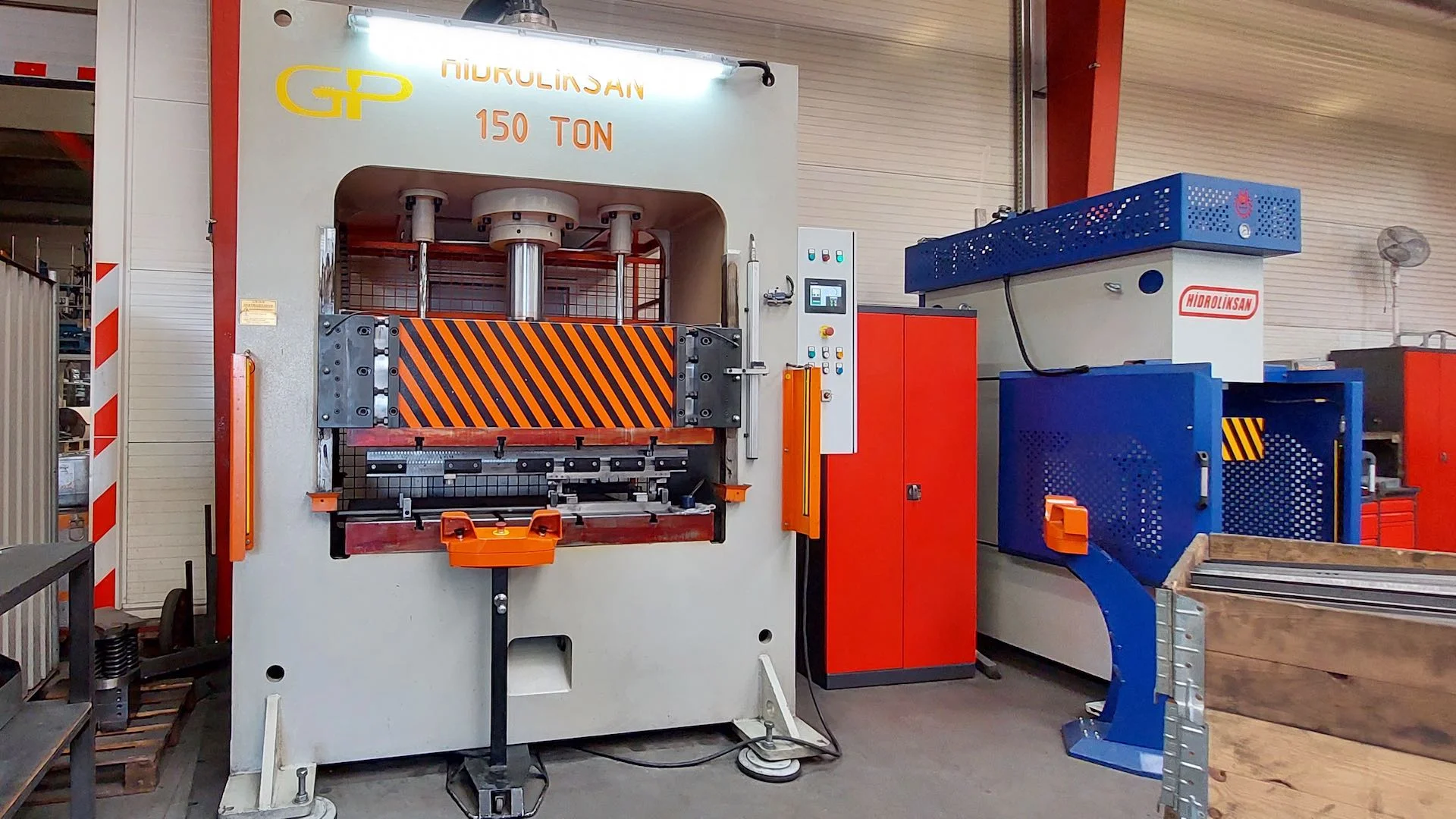
Thanks to Hidroliksan hydraulic presses, we are able to offer a wide range of applications.
FAQ
How do hydraulic presses work?
Hydraulic presses use the force of pressurized fluid to form or process metal components. This technology enables precise force control and stable process conditions.
What materials can be processed using hydraulic presses?
We process carbon steel, stainless steel, aluminium and other structural metals. Working parameters are selected individually based on material properties.
Do you offer both single-piece and serial production?
Yes, we carry out both single components and serial production. Hydraulic presses provide high repeatability, which is especially important for larger orders.
What are the advantages of hydraulic presses compared to other processing methods?
Hydraulic presses offer precise force control, high repeatability and the ability to process components with complex geometries. In addition, they ensure stable quality and efficient production.
Can hydraulic press services be combined with other processes?
Yes, hydraulic press operations can be combined with laser cutting, sheet metal bending, CNC machining and welding, allowing comprehensive execution of industrial projects.
Which industries do you serve with hydraulic press services?
We work with companies from the machinery, construction, structural, automotive and manufacturing industries, as well as the furniture and advertising sectors.